
Vegan at Family Dinners: A Survival Guide Vegan Vienna Blog Post
By Vegan Vienna Editorial | April 15, 2026 at 05:30 PM | 7 min read
Most people don't realize how emotional food really is until they decide to eat differently. It's never just about what's on the plate. It's about traditions, memories, identity, and sometimes even quiet expectations that no one ever says out loud. And suddenly, something as simple as saying "I'm vegan now" can turn a relaxed family dinner into a strange, slightly tense social experiment.
If you want matching places right after reading, start with all vegan restaurants in Vienna, the top 10 vegan restaurants or the vegan map.
Understanding What's Really Happening
I remember the first time I showed up to a family dinner after going vegan. My aunt had spent hours cooking, and within five minutes I found myself explaining why I wouldn't eat the roast. The room didn't explode into conflict, but something shifted. You could feel it. That subtle mix of curiosity, confusion, and maybe a tiny bit of defensiveness. If you've been there, you already know exactly what I mean.
This guide isn't about winning arguments or proving a point. It's about navigating those moments with confidence, calm, and maybe even a bit of humor. Because family dinners don't have to be battlegrounds. They can actually become something better.
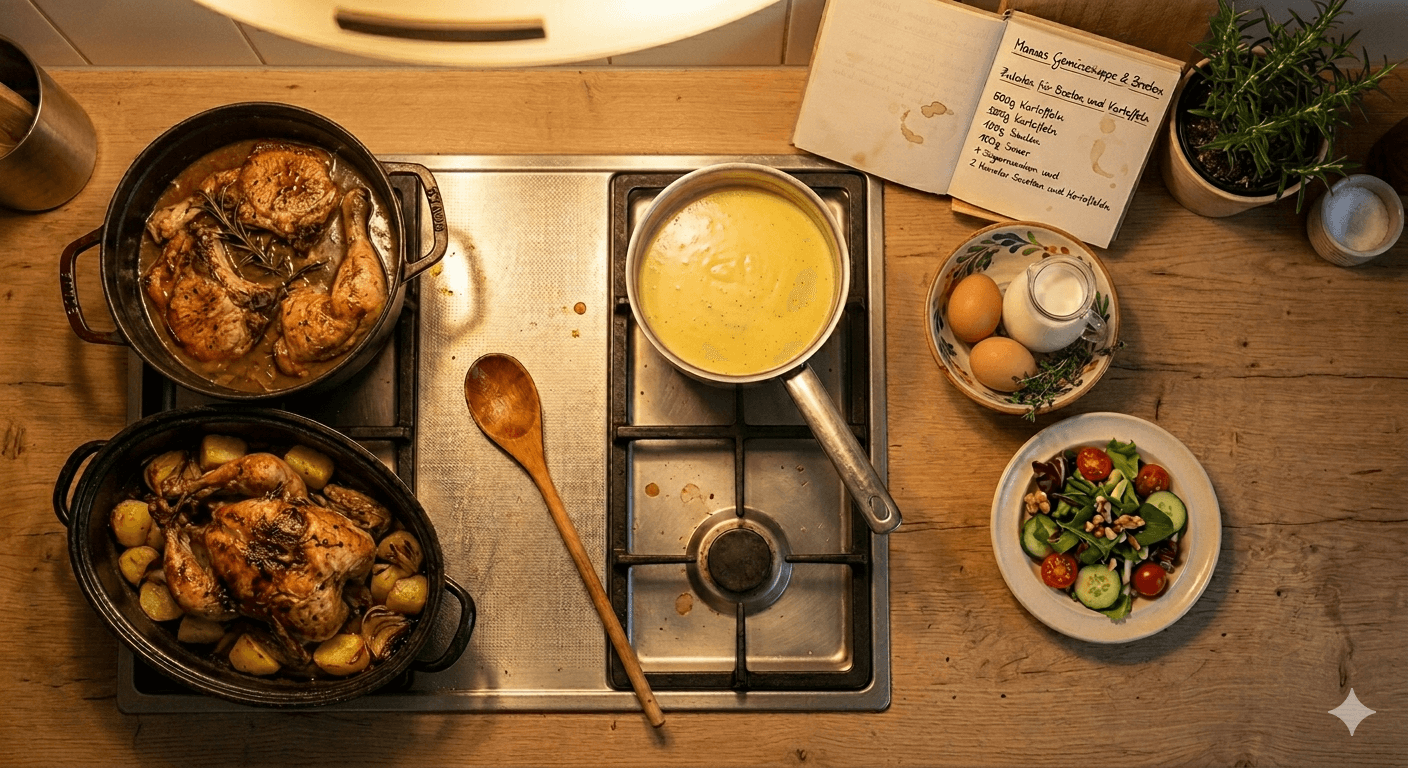
When you go vegan, you think you're making a personal decision. And you are. But at a family dinner, it rarely stays personal. Food is deeply tied to culture and care. When someone cooks for you, they're not just feeding you. They're expressing love in a very specific way.
So when you refuse a dish, even politely, it can feel to them like a rejection of that effort. Not because they're irrational, but because humans naturally attach meaning to actions. Your "no thanks" might land as "what you made isn't good enough" or even "your way of living is wrong," even if that's not what you meant at all.
A friend of mine once told me about his grandmother who spent all afternoon making a traditional dish, only for him to say he couldn't eat it anymore. She didn't get angry, but she went quiet. Later she asked him, "Did I do something wrong?" That's the moment you realize this isn't just about food.
Understanding this changes everything. It helps you respond with empathy instead of frustration.
The First Dinner Is Always the Hardest
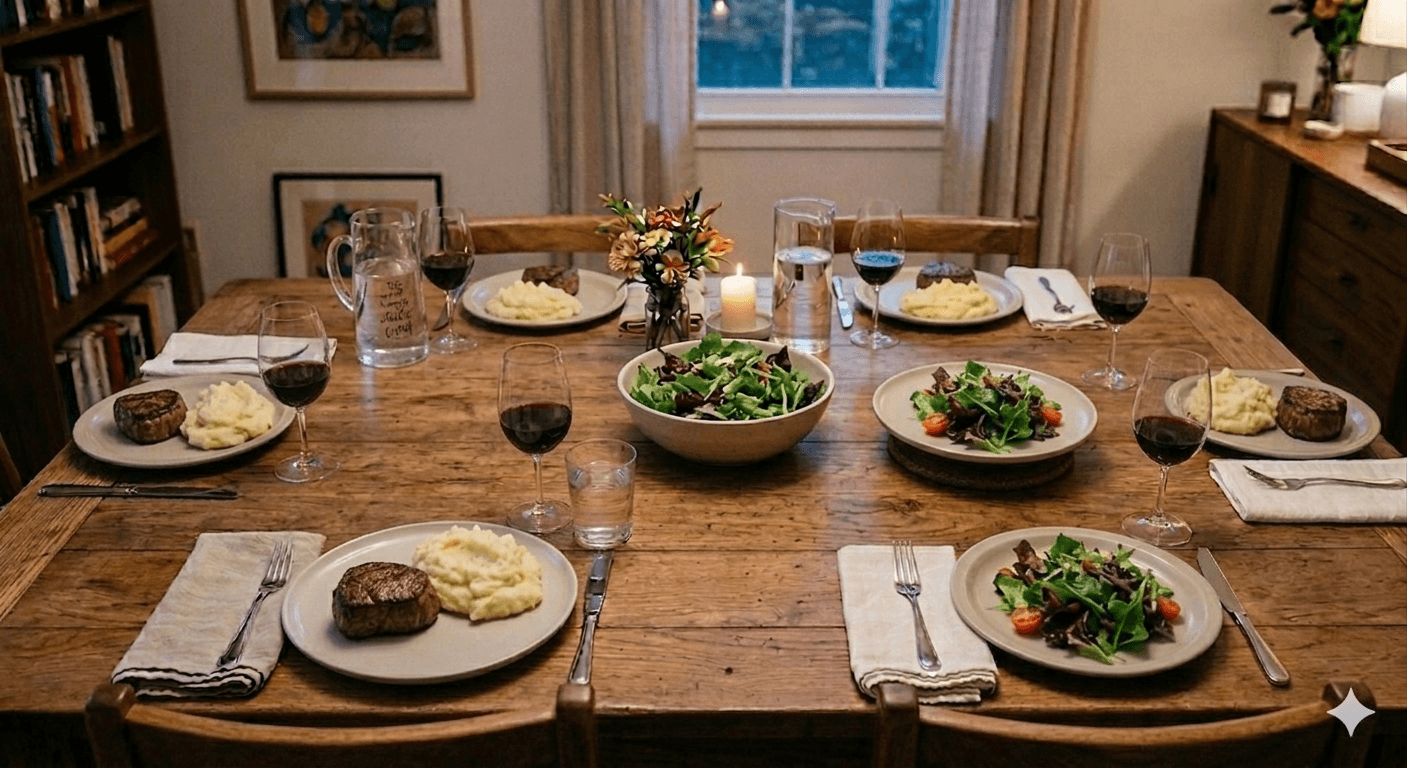
There's something uniquely uncomfortable about that first family dinner after going vegan. You walk in already slightly on edge, wondering what questions will come up, whether there will be anything you can eat, or if you'll have to explain yourself five times in a row.
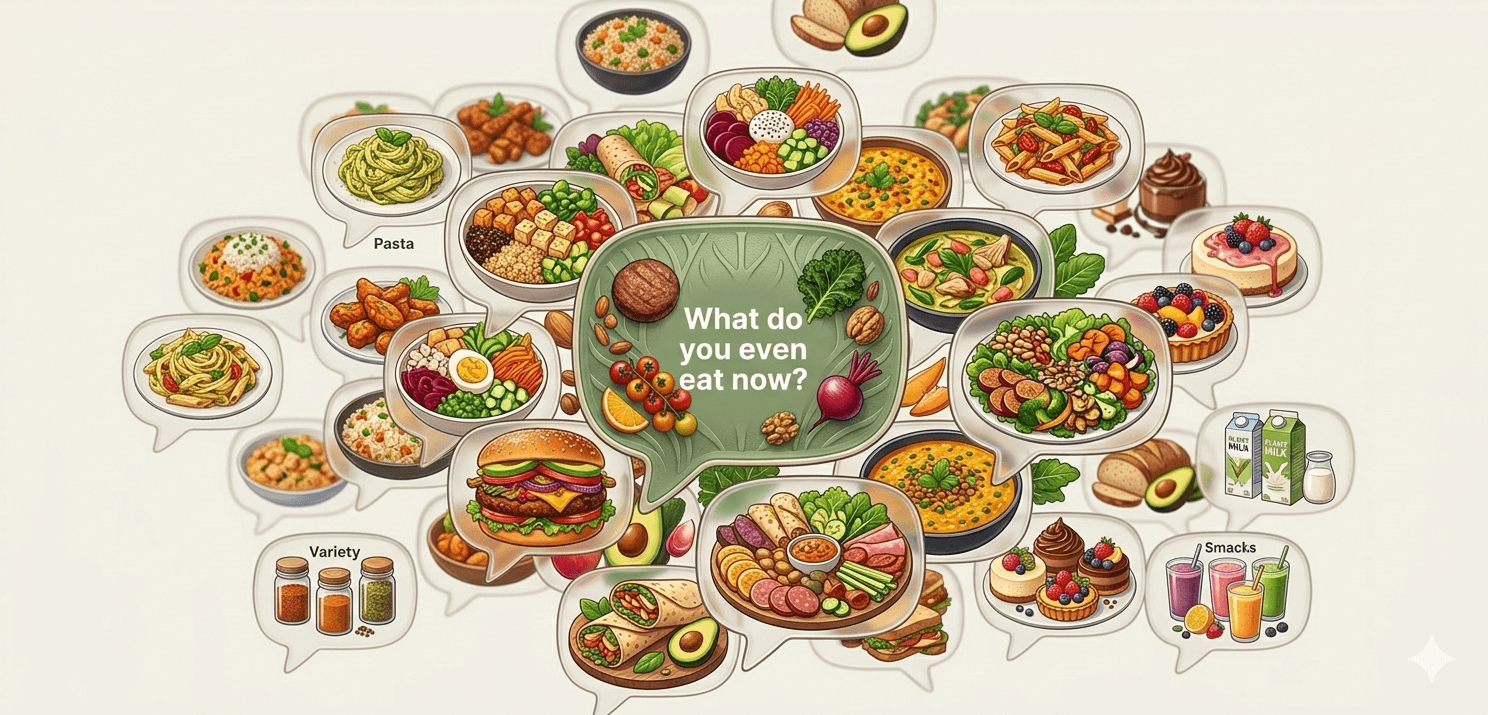
Imagine sitting down, everyone else has full plates, and you're picking at bread and salad. Someone inevitably asks, "So... what do you even eat now?" It sounds innocent, but suddenly all eyes are on you.
This is where many people either shut down or go into full defense mode. Both are understandable, but neither really helps.
Instead, think of this moment as setting the tone. You don't need to justify your entire lifestyle in one dinner. A simple, calm answer works surprisingly well. Something like, "Honestly, a lot of things, just plant-based versions. It's been easier than I expected." It keeps things light, non-confrontational, and leaves room for curiosity instead of tension.
Bring Something, Change Everything
One of the easiest ways to transform the entire dynamic is also the simplest. Bring your own dish. Not as a defensive move, but as a contribution.
There's a psychological shift that happens when you do this. Instead of being "the person who doesn't eat anything," you become "the person who brought something interesting." It turns the focus from absence to addition.
I once brought a creamy vegan pasta to a family gathering, not expecting much. It was gone in fifteen minutes. People didn't even realize it was vegan until I mentioned it later. Suddenly, the conversation changed. Instead of "why don't you eat this," it became "wait, how did you make that?"
Food has a way of opening minds without needing a single argument.
Navigating Questions Without Turning It Into a Debate
You will get questions. Some are genuinely curious. Others might feel slightly loaded. The key difference is not always in the words, but in the tone.
"Where do you get your protein?" can be a real question or a disguised challenge. Responding calmly either way keeps you in control of the situation.
You don't need to overwhelm anyone with data. In fact, simple answers work better. "Beans, lentils, tofu, it adds up quickly" is often enough. If someone wants more detail, they'll ask.
There's also power in not engaging every challenge. If someone pushes too hard, it's okay to gently redirect. "I get why it sounds strange, I thought the same at first. But it works for me." That sentence does something subtle. It acknowledges their perspective without giving up your own.
And sometimes, humor works better than logic. A light "I promise I'm not surviving on lettuce alone" can defuse tension instantly.
The Quiet Pressure You Might Not Expect
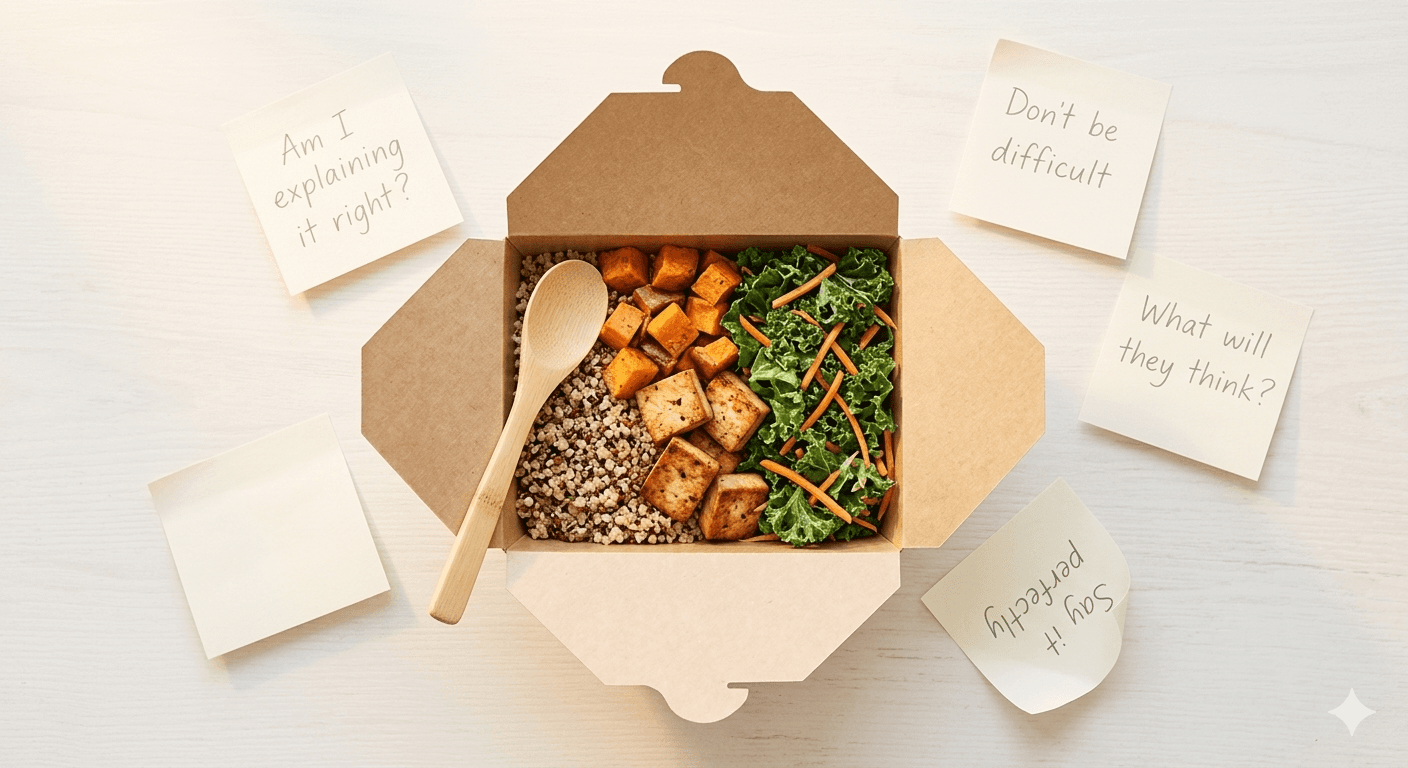
What many people don't talk about is the internal pressure. Not from others, but from yourself. You might feel like you're representing veganism as a whole. Like if you say the wrong thing or come across as difficult, you're reinforcing stereotypes.
That pressure can make you overthink everything. How you answer questions, how much you eat, even how you sit at the table.
But here's the reality. You're just a person eating dinner. You don't need to be perfect. You don't need to convince anyone of anything. The more relaxed you are, the more natural the whole situation becomes.
I remember a dinner where I decided to stop trying to "handle it perfectly." I just ate what I could, joined conversations, laughed at jokes, and didn't turn every comment into a discussion. By the end of the evening, it didn't feel like "the vegan dinner." It just felt like dinner.
When Someone Challenges You Directly
Every now and then, someone will challenge you more directly. Maybe they question your reasons, make a joke that doesn't quite land, or push for a debate you didn't ask for.
This is where emotional contrast comes in. The expectation is conflict. The reality can be calm.
Instead of reacting immediately, pause for a second. That small gap changes your response completely. You can say, "I get why you'd think that," or "I used to see it the same way." These phrases lower defensiveness because they create connection instead of opposition.
A friend of mine had an uncle who loved debating everything. At one dinner, he started going in on veganism, expecting a back-and-forth argument. My friend just listened, nodded, and said, "That's fair, I just feel better eating this way." The conversation ended almost instantly. There was nothing to push against.
Not every comment needs a counterargument.
Creating Allies Without Forcing It
Something interesting happens over time. The same people who were skeptical at first start becoming curious. Maybe someone asks for your recipe. Maybe someone makes a small vegan dish "just in case you come."
These are small signals, but they matter. They show that your presence is already influencing the environment, without you needing to push anything.
You don't create allies by convincing people. You create them by making the experience feel easy, normal, and even enjoyable. When people associate vegan food with good taste and relaxed conversations, their perception shifts naturally.
It Gets Easier, Even If It Doesn't Feel Like It Yet
The first few dinners might feel awkward. You might replay conversations in your head afterward, thinking about what you could have said differently. That's normal.
But over time, something changes. The questions become less frequent. The tension fades. People adjust, just like you did when you first made the change.
Eventually, it becomes part of the background. You're not "the vegan at the table." You're just you.
And sometimes, without even noticing when it happened, someone else at the table orders a vegan dish, or says they've been trying to eat less meat. That's when you realize your presence did more than you thought.
Conclusion: It Was Never Just About the Food
Family dinners as a vegan are not really about navigating menus. They're about navigating people, emotions, and unspoken expectations. Once you understand that, everything becomes easier.
You don't need to argue your way into acceptance. You don't need to defend every choice. Most of the time, simply showing up calmly, contributing something delicious, and staying grounded in your decision is enough.
What feels like tension at the beginning often turns into something surprisingly positive over time. Conversations shift. Curiosity replaces skepticism. And the same table that once felt uncomfortable starts to feel familiar again.
In the end, the goal isn't to win anyone over. It's to feel at ease in your own choices, even in a room full of different ones.
If this article speaks to where you are right now, you might also like our deeper piece on why becoming vegan can change the way you think about food, values, and everyday life: Why Becoming Vegan Might Be the Best Decision of Your Life.